Mammograms, screening and implants in Australia
Implants change how screening is done, not whether you should do it. Displacement views, ultrasound, MRI and what to tell BreastScreen.
· Updated · 6 min read
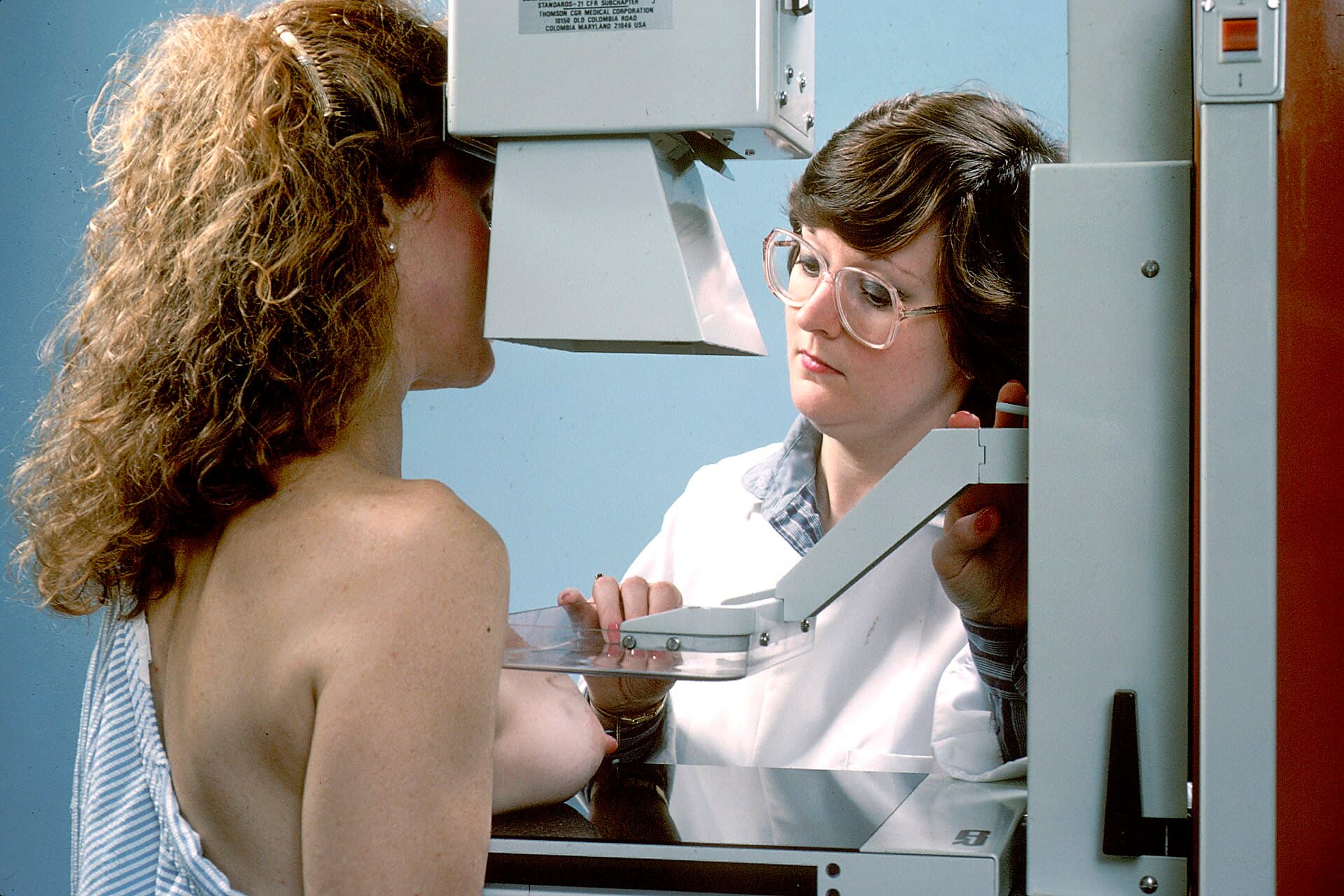
Implants sit in a country with a screening programme. That is a gift. It is also a logistical sentence: you must tell people what is in your chest so they can look at the tissue that still belongs to you.
This is not a rupture essay. That is surveillance. This is about cancer screening, which implants do not cancel.
Tell the booking clerk
When you book BreastScreen or a private mammogram, say that you have implants, what fill if you know, and whether you have had a lift or fat grafting. Extra views — Eklund displacement views — move the device so more tissue can be seen. They take a little more time and a little more compression. They are ordinary.
If you have a fat-graft history, say that too. Oil cysts and calcifications need a reader who is not surprised.
What mammography can and cannot do
It can screen tissue. It can be limited by a device that hides a slice of the breast, which is why extra views and, sometimes, ultrasound exist. It is not the best tool for asking “is the silicone shell intact?” Do not use a screening mammogram as a silent-rupture test and then feel betrayed.
Ultrasound is a common extra. MRI is a specialist tool for specific questions — implant integrity, dense tissue, high-risk pathways — not a casual annual accessory unless your team has a reason.
Does screening still apply to you?
Age, family history, and national guidelines apply whether or not you have a device. Implants are not a screening holiday. People who skipped ten years of mammograms because they were “waiting until after surgery” have waited in the wrong queue.
If you had reconstruction after cancer, your pathway is individual and usually more intensive. This essay is mostly for people who had cosmetic or congenital work and still have remaining breast tissue.
Comfort and the story about bursting
Compression is uncomfortable. It is not, in ordinary practice, a grenade. If a device is already failing, a mammogram is not the moral cause. Skipping screening to protect a device is protecting the wrong object.
If anxiety is the barrier, ask for a service used to implants. Sydney has them. Take the implant card. Take a friend.
Aftercare of the appointment
Ask for the report to mention implants and any limitation. Send it to the GP. If something is incomplete, complete it. Do not file “suboptimal views” in a drawer like a school report you disliked.
AHPRA-registered specialists and BreastScreen exist so you do not have to invent a radiology career. Use them. The device was the elective chapter. Screening is the long one.
If you are told the views were limited
That is a request for a plan, not a shrug. The plan may be ultrasound, a repeat with an implant-experienced radiographer, or a specialist clinic. Write the plan in your calendar the same week. “Limited views” that sit in a drawer for two years are how people drift out of a programme.
Take the limitation seriously and then continue with your life. Screening is a habit, not a personality.
Dense tissue, family history and when the pathway thickens
If you have dense breasts or a strong family history, your screening may already include more than a two-yearly mammogram. Implants add a technical wrinkle, not a reason to drop out. Ask the GP whether you belong in a higher-risk clinic. That question is independent of the device and easy to forget once the device has taken up all the air.
Teaching the people who come with you
A friend who says “it might burst” in the waiting room is not helping. Give them this page or a one-line script: uncommon, tell the radiographer, do the test. Support is logistics and quiet, not folklore.
Book the next screen before you leave the building if you can. Habits survive when they have dates.
A closing note from this desk
Say you have implants when you book. Extra views are ordinary. Mammograms screen tissue; they are not rupture tests. Do not skip a programme to protect a device. Compression is uncomfortable and, in ordinary practice, not a grenade.
If views are limited, make a plan the same week. If you have dense tissue or a strong family history, ask whether you already belong on a thicker pathway. The device was elective. Screening is the long chapter. Book the next date before you leave.
Private versus BreastScreen, practically
Both can image implants if they are told. BreastScreen is built for population screening. Private rooms may be faster if you already have a specialist pathway. The right answer is the one you will attend. Attendance beats an ideal protocol you postpone.
If you move, transfer the habit, not only the files. A new postcode is how people fall out of a programme and call it busyness.
If you are due and also due for implant imaging, ask whether the visits can be coordinated so you are not compressed twice in a fortnight without need. Coordination is courtesy. Courtesy is still medicine.
If you have a disability or a shoulder that cannot do the standard pose, say so when you book. Implant-experienced services are used to adapting. Adapting is better than skipping. Skipping is how devices become an excuse to leave a programme that was built for the tissue you still have.
If you are called back, go. Callbacks are common when extra views are needed. They are not a diagnosis. Take the card. Take a book. Do not spend the night reconstructing a disaster from a polite SMS. The programme is allowed to be careful. You are allowed to be frightened and still attend.
If you dread compression, book the first morning slot and eat breakfast. Dread is worse when you are late and hungry. The machine will still be the machine. You will be slightly more yourself.
Take the report even when it is normal. Normal reports are how you prove a habit later. File them with the card. Future radiologists like a boring stack.
This article is independent editorial information for a general Australian audience. It is not medical advice, not a diagnosis, and not an advertisement for a health service or a particular practitioner. Decisions about surgery belong with you and an AHPRA-registered specialist who has examined you. See our editorial standards.
Questions readers send the desk
- Can a mammogram burst an implant?
- Rupture from a standard mammogram is uncommon. Tell the radiographer you have implants so they can use displacement views and appropriate pressure. Do not skip screening out of folklore.
- Does BreastScreen take people with implants?
- Yes. Say so when you book. Extra views take a little longer. Private imaging is an alternative if that is how you already screen.